Why Copper Pipe is Best for LPG Lines | Gas Care Expert Guide
When designing a permanent residential LPG pipeline—specifically the critical run from an outdoor cylinder cage into your kitchen—the choice of piping material is the single most important decision you will make for your home.
At Gas Care by Stove-Technica, we audit, repair, and install high-pressure gas systems daily. We constantly see homeowners spend lakhs on premium kitchen hobs and modular cabinets, only to compromise on the invisible infrastructure delivering the highly combustible gas.
While cheaper materials like Mild Steel (MS) or multi-layer plastics flood the market, Copper Pipe remains the undisputed, global gold-standard choice. Choosing copper is not simply buying a pipe; it is a one-time investment in the permanent safety, architectural integrity, and enduring quality of your home’s gas delivery system.
Here is the exhaustive Gas Care technical breakdown of why copper outperforms every other material on the market.
The Material Science: Dimensional Stability Under Pressure
To understand why copper is the premium choice, we must look at how LPG behaves. Liquid Petroleum Gas fluctuates in pressure and temperature depending on the ambient environment and the cooking load.
- The Copper Advantage: Standard LPG-grade copper tubing (typically 3/8″ or 1/2″ nominal size) possesses incredible dimensional stability. It can safely handle high-pressure manifold setups and the rapid temperature swings near cooking zones without weakening, expanding, or fatiguing over time.
- The 50-Year Guarantee: A professionally installed Type-L copper gas line is engineered to last for over 50 years. It often matches or exceeds the lifespan of the building’s concrete foundation. Unlike flexible rubber corrugated hoses that turn brittle, crack, and require mandatory replacement every few years, copper provides a permanent, zero-maintenance infrastructure solution.
The Coastal Climate Advantage (The Kerala Context)
For homes located in high-humidity or coastal regions, the environment is actively trying to destroy your outdoor metal fixtures. This is where copper heavily separates itself from budget alternatives.
- The Rust Immunity: Copper is a non-ferrous metal, meaning it contains absolutely zero iron. Therefore, it is physically impossible for copper to rust.
- The Danger of Mild Steel (MS): Many budget contractors use MS (Mild Steel) pipes for outdoor cylinder runs. Even when painted, MS pipes are highly vulnerable to the moisture-heavy monsoon air. They don’t just rust on the outside; the moisture in the air can cause internal pitting—a dangerous process where the pipe rusts from the inside out, eventually leading to microscopic, undetected gas leaks over years of use.
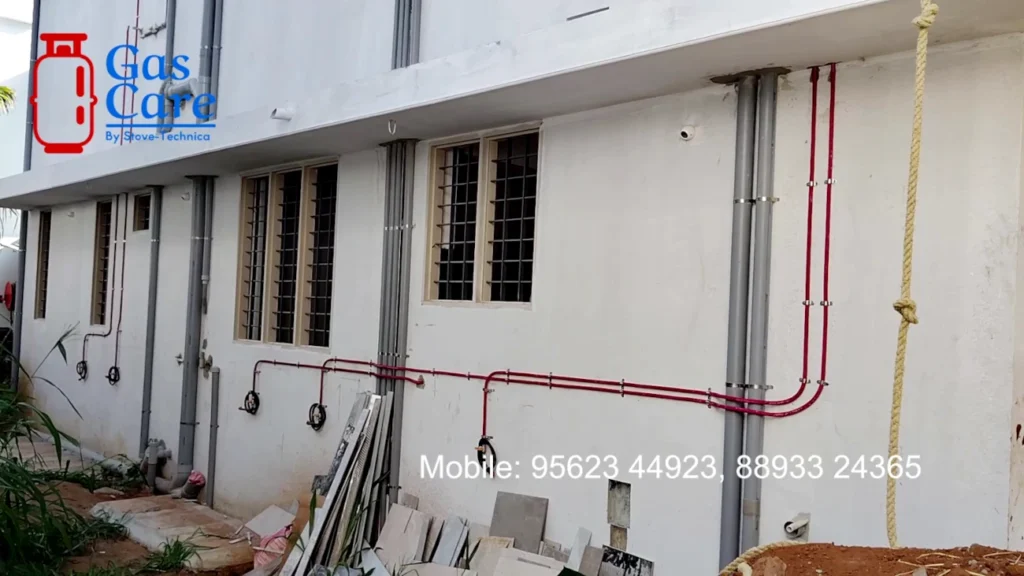
- The Premium Solution: Copper heavily resists chemical corrosion and moisture. Your external pipeline run, from the outdoor gas bank, through the exterior walls, and into the kitchen, maintains its structural thickness and high-pressure integrity indefinitely, regardless of the weather.
The Safety Gold Standard: The Physics of Brazed Joints
The structural integrity of a high-pressure pipeline is only as strong as its weakest link: the joints connecting the pipes. This is the single biggest reason Gas Care engineers insist on copper.
What is Brazing?
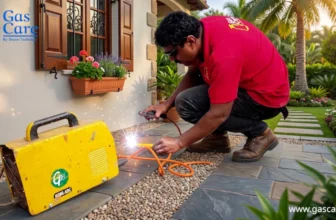
When installing copper pipe for LPG, expert technicians do not use simple glue or screw threads. We use a highly specialized, technical process called brazing. This involves using a high-temperature torch to heat the copper and applying a specialized filler alloy. Through capillary action, the liquid alloy is drawn into the microscopic gap between the pipe and the fitting.
The Monolithic, Zero-Leak Seal
The result of brazing is a joint that is effectively monolithic—meaning the pipe and the fitting have been fused into one solid, continuous piece of metal.
- Eliminating Mechanical Failure: Modern plumbing often uses mechanical compression fittings (like crimped MLC pipes) that rely on internal rubber O-rings to seal the gas. Over a decade of temperature fluctuations and micro-vibrations, rubber inevitably dries out, shrinks, and fails. Brazed copper has no rubber to degrade.
- Defeating Threaded Leaks: Steel pipes use threaded joints wrapped in Teflon tape. Over time, the threads corrode, and the physical shifting of the house can loosen the joints. A properly executed and pressure-tested brazed copper joint provides the strongest, most resilient, and most reliably leak-proof connection available in modern gas engineering.
In previous part, we established that copper’s dimensional stability under high pressure and its absolute immunity to rust make it the ultimate choice for Kerala’s humid climate. We also explored the physics of brazing—the process that fuses copper into a leak-proof, monolithic structure.
Now, we dive into how these materials react in worst-case scenarios (fire safety), lay out a direct head-to-head technical comparison against the most common budget alternatives, and reveal the strict installation protocols we follow to guarantee a 50-year lifespan.
Fire Resistance and Thermal Stability (The Case for Concealed Lines)
Safety in a modern Indian kitchen goes beyond simply preventing a gas leak; it involves how the surrounding infrastructure reacts in the event of an external fire. This is a critical factor when architects and interior designers request “concealed” gas pipelines.
The Melting Point Advantage
Copper is a highly resilient, non-combustible metal with a melting point of approximately 1,085°C. In a typical residential kitchen fire, temperatures rarely exceed 600°C to 800°C.
- The Result: Even under direct flame exposure, a brazed copper pipe retains its structural strength. It will not melt, shatter, or release toxic fumes, keeping the high-pressure LPG safely contained and preventing the fire from escalating into an explosion.
The Safest Choice for Concealment
Modern modular kitchens often require gas lines to be routed inside concrete slabs, behind tiles, or above false ceilings for aesthetic reasons.
- If a concealed pipe leaks or melts, the gas becomes trapped inside the wall cavity, creating a highly volatile “bomb” effect. Because of its absolute fire resistance and the permanent nature of brazed joints (which never need to be tightened), copper is the only material Stove-Technica recommends for concealed LPG lines. —
The Material Showdown: Copper vs. MS Steel vs. Jindal MLC
Why do we strongly advocate against using cheaper alternatives for your primary kitchen supply? At Gas Care, we constantly replace these failing systems. Here is the unfiltered engineering reality of what happens when you cut costs on gas lines.
| Feature / Metric | Premium Copper Pipe (Type L) | MS (Mild Steel) Pipe | Jindal MLC (Multi-Layer Composite) |
| Rust & Corrosion | Highly Resistant: Zero rusting. The ultimate choice for coastal/humid zones. | Prone to Rust: Requires constant painting and weather-coating. | Moderate: Plastic outer layer resists rust, but UV exposure degrades it. |
| Joint Security | Permanent (Brazed): Monolithic seal. Zero mechanical failure points. | Vulnerable (Threaded): Threads corrode, rust, and loosen over time. | Mechanical (Crimped): Relies on internal rubber O-rings which can dry out and fail. |
| Fire Safety | Excellent: Non-combustible (Melting point ~1,085°C). | Good: Non-combustible metal. | Poor: Inner/outer plastic layers melt rapidly under direct flame. |
| Installation Profile | Clean & Flexible: Bends easily, requires fewer fittings. Perfect for modular kitchens. | Rigid & Bulky: Requires heavy threading machines; sharp 90-degree elbows limit flow. | Flexible: Very easy to bend, but bulky crimp fittings are required. |
| Expected Lifespan | 50+ Years: A true one-time, multi-generational investment. | 10 – 15 Years: High risk of internal pitting and unseen thread leaks. | 15 – 20 Years: Good, but not a permanent architectural fix. |
The Danger of Mild Steel (MS)
MS pipes were the standard decades ago simply because they were cheap. However, threaded steel joints wrapped in Teflon tape are notorious for microscopic leaks. Furthermore, MS pipes rust from the inside out due to moisture in the gas and surrounding air (internal pitting). By the time you see rust on the outside of an MS pipe, the wall thickness is already critically compromised.
The Flaw in MLC (Multi-Layer Composite)
MLC pipes (like Jindal) consist of an aluminum core sandwiched between layers of PEX plastic. They are currently popular among budget contractors because they are incredibly cheap and require no specialized brazing skills to install. However, they rely on mechanical crimp fittings containing rubber O-rings. Over 10 years of temperature swings, that rubber dries, shrinks, and fails. Additionally, the plastic layers will melt almost instantly in a kitchen fire, making them highly dangerous for concealed routing.
The 10-Year Economics: Copper vs. Mild Steel (Total Cost of Ownership)
At Stove-Technica, clients often ask us why they should pay a premium for copper when a local plumber is offering an MS (Mild Steel) installation for half the price. The answer lies in the Total Cost of Ownership (TCO) over a 10-year period.
The Hidden Costs of Mild Steel (MS):
- Year 1: Lower initial installation cost.
- Year 2-3: The coastal moisture in Kerala begins oxidizing the exterior. You must hire a painter to sand down the rust and apply anti-corrosive red oxide and enamel paint (Est. ₹1,500 – ₹2,500).
- Year 5-7: Internal pitting (rusting from the inside) begins to compromise the threaded joints. Micro-leaks may require retightening or replacing specific elbows and valves (Est. ₹3,000+).
- Year 10+: The entire MS line is often deemed unsafe by safety auditors and requires a complete tear-down and replacement.
The Economics of Premium Copper:
- Year 1: Higher initial investment (due to raw material costs and specialized brazing labor).
- Year 2 to Year 50: Zero maintenance cost. No painting required, no joint tightening, no rust scaling, and no replacement needed.
When you factor in the recurring maintenance, labor, and the inevitable replacement of an MS steel line, a brazed copper pipeline actually becomes the cheaper option by Year 7, while providing infinitely more safety from Day 1.
The Gas Care Installation Standard (Execution is Everything)
Purchasing premium copper is only half the battle; the pipeline is only as safe as the engineer installing it. When the Stove-Technica team installs a residential LPG line, we adhere strictly to international safety codes.
- Proper Sizing & Grading: We do not use thin-walled refrigeration copper. We utilize standard LPG-grade copper pipe (typically 3/8″ or 1/2″ nominal size depending on your total burner load) with the proper “Type L” wall thickness designed specifically to handle high-pressure fuel gas.
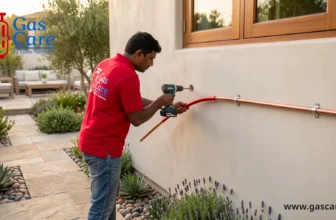
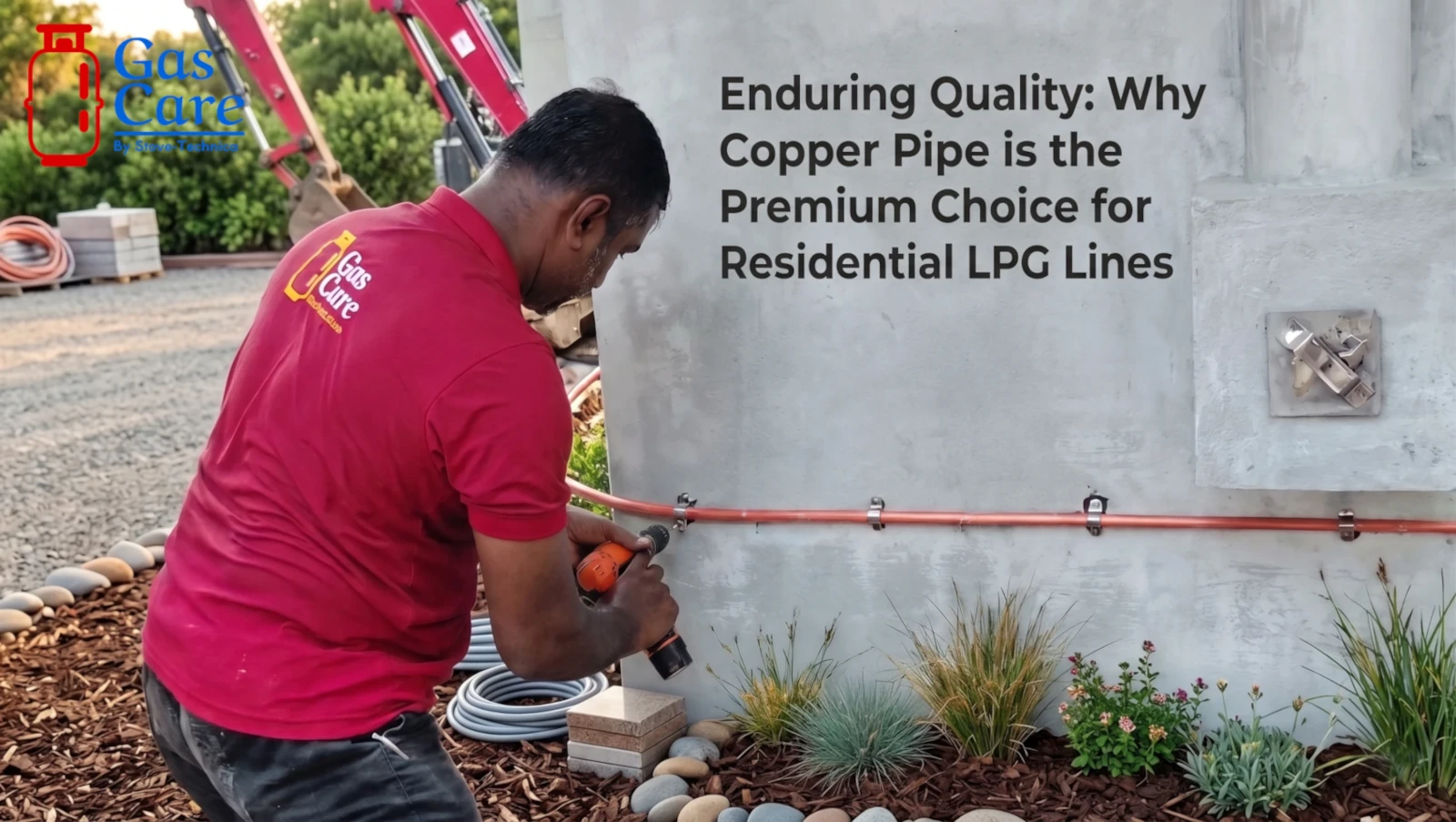
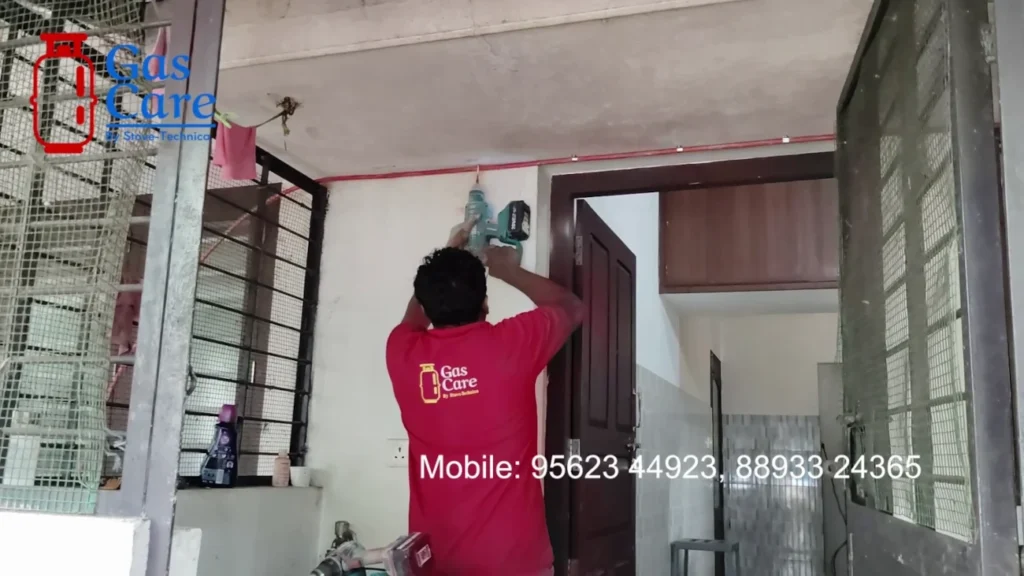
- Structural Support & Routing: The line is run as short and straight as physically possible. To prevent the pipe from sagging or suffering vibration wear (which can stress the joints over decades), we install heavy-duty, rubber-lined brass clamps every 0.9 to 1.2 meters.
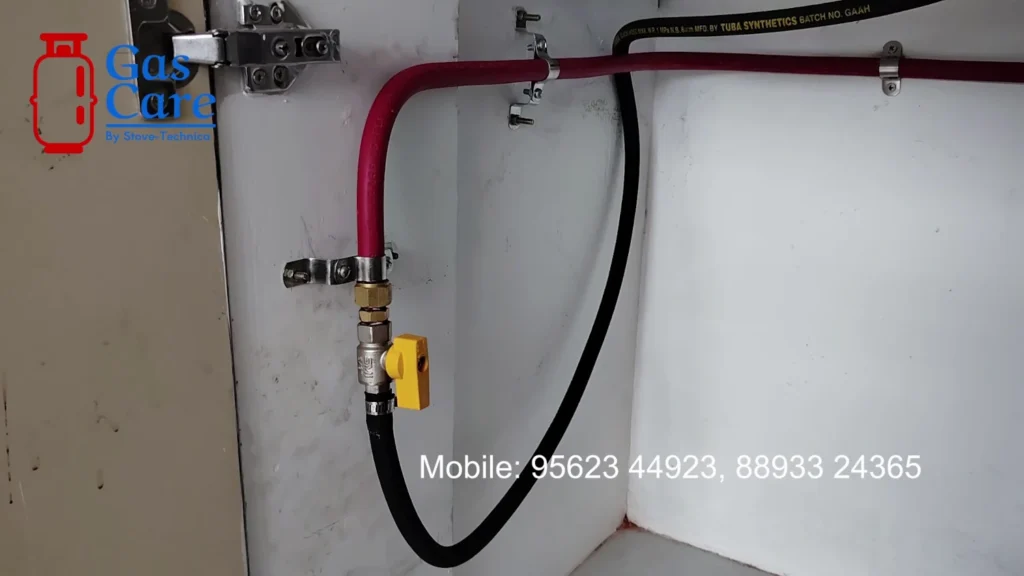
- Emergency Control: Every single installation includes an accessible, quarter-turn emergency service isolation valve positioned right before the kitchen hob.
- The Final Commissioning: We never leave a site on assumption. Before commissioning the gas line, we conduct a rigorous pneumatic pressure test (holding the line at a pressure significantly higher than standard LPG output for several hours) and a chemical bubble-test on every single brazed joint to guarantee a 100% leak-proof system.
In previous part, we covered the dimensional stability of copper, its absolute immunity to Kerala’s coastal rust, the flawless physics of brazed joints, and why it heavily outperforms Mild Steel (MS) and Jindal MLC in fire safety scenarios.
The Gas Care Annual Safety Checklist for Homeowners
While a brazed copper LPG line requires virtually zero structural maintenance, you should still conduct a basic visual audit of your gas system once a year. Here is the exact checklist our Stove-Technica engineers recommend for homeowners:
- The Soapy Water Test (The Suraksha Hose): While your copper transit line is permanent, the short, flexible orange hose connecting the copper wall-valve to your glass-top stove is not. Once a year, apply soapy water to the ends of this rubber hose while the gas is on. If it bubbles, replace the hose immediately. (Note: Rubber hoses must be replaced every 3 to 5 years regardless of condition).
- Valve Movement: Turn the emergency quarter-turn isolation valve (located near your stove) off and on. It should move smoothly without extreme force. This ensures it won’t be jammed if you ever have an emergency.
- Inspect the Copper Patina: Over years of exposure to Kerala’s humid air, the exterior copper pipe near your outdoor cylinder cage may change color, turning dark brown or developing a slight green tint (patina). Do not panic. This is a natural, protective oxidation layer that prevents further corrosion. Unlike iron rust, patina does not weaken the copper tube.
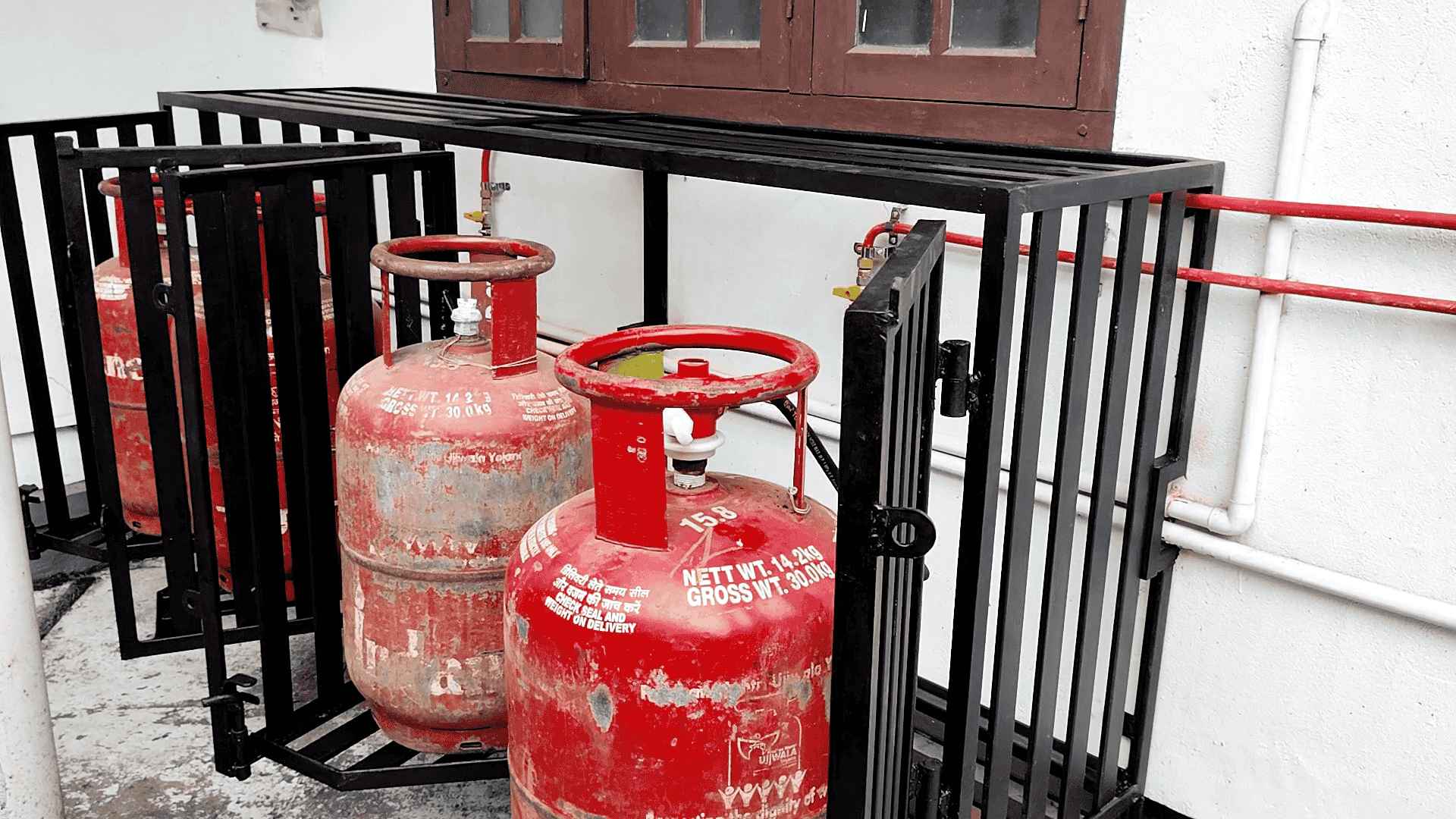
- Clear the Cylinder Cage: Ensure the area around your outdoor LPG cylinder bank is free from dry leaves, electrical wiring, or stored chemicals. Proper ventilation around the source is just as critical as the pipeline itself.
The Gas Care Expert FAQs
When clients transition from traditional cylinder-in-kitchen setups to modern, centralized outdoor gas banks, they have highly specific questions regarding safety and cost. Here are the authoritative Stove-Technica answers.
Q: Can I just use standard copper water plumbing pipes for my LPG line to save money?
A: Absolutely not. This is a critical safety violation. While they may look identical on the outside, copper tubing used for water plumbing is much thinner and softer. Gas lines must handle pressurized fuel and require specific BIS-certified “Type L” (or equivalent heavy-duty) copper. Using thin-walled water pipes for high-pressure LPG risks catastrophic bursting or micro-tears during temperature fluctuations. At Gas Care, we exclusively use certified, gas-rated heavy-gauge copper.
Q: Is it genuinely safe to conceal a gas pipeline inside a concrete wall or under the floor?
A: It is highly safe, but only if two strict conditions are met: 1. The material must be brazed copper (never threaded steel or rubber-sealed MLC).
2. The pipe must be heavily sleeved (often in a protective PVC conduit) before being plastered over to protect it from the chemicals in cement. Because a brazed copper joint is completely permanent and monolithic, it will never loosen inside the wall, making it the only architect-approved method for concealed gas routing.
Q: How do I know if my concealed copper line is leaking if I can’t see it?
A: This is why execution is everything. A properly installed brazed line will not spontaneously leak. However, before we ever allow a wall to be plastered or a false ceiling to be closed, the Gas Care team conducts a “Pneumatic Drop Test.” We seal the line, pump it full of compressed air at a pressure much higher than standard LPG, and attach a pressure gauge. If the gauge holds perfectly steady for hours, the system is mathematically guaranteed to be 100% leak-proof.
Q: Why can’t I just use a long, flexible rubber “Suraksha” hose from the outside cylinder directly to my stove?
A: Flexible rubber gas hoses are designed strictly for the final, short connection (usually 1 to 1.5 meters) between the rigid wall valve and the stove itself. Running a 15-meter rubber hose from outside into your kitchen is a severe fire and safety hazard. Rubber degrades over time, cracks in the sun, and most dangerously, is highly vulnerable to being chewed through by rats and rodents. The main transit line must always be rigid metal.
Q: I was quoted ₹8,000 for an MS steel line and ₹15,000 for a Copper line. Is the price difference really justified?
A: Yes, because you are comparing a temporary fix to a permanent asset. The MS steel line will require scraping and repainting every two years to fight external rust. Within 10 to 12 years, the internal threads will likely corrode, requiring sections to be torn out and replaced. The ₹15,000 copper line is a true “fill it and forget it” investment. It requires zero maintenance, will not rust, and will outlast your kitchen cabinets.
People Also Ask (PAA) – Gas Care Expert Answers
Is copper pipe safe for LPG gas?
Yes, it is globally recognized as the safest material available for residential and commercial LPG pipelines. Copper exhibits incredible dimensional stability, meaning it can safely handle high-pressure gas and rapid temperature fluctuations without expanding or weakening. When joined using high-heat brazing, it creates a permanent, monolithic seal that is mathematically guaranteed against micro-leaks.
Can we use regular copper water pipes for an LPG line?
Absolutely not. This is a severe safety hazard. While they may look identical on the outside, copper pipes used for water plumbing (often Type M) are much thinner and softer. Gas lines carry pressurized fuel and strictly require heavy-gauge, BIS-certified “Type L” (or specific gas-grade) copper tubing to prevent bursting or micro-tearing. At Stove-Technica, we exclusively use certified high-pressure gas copper.
Which pipe is best for a concealed (underground or inside wall) kitchen gas line?
Brazed copper is the only material recommended for concealed routing. If a gas pipe leaks inside a wall, the trapped gas acts like a bomb. Because brazed copper joints are permanently fused and never loosen (unlike threaded steel pipes or rubber-sealed MLC pipes), it is the only architect-approved method for safely hiding gas lines behind modular kitchen tiles or false ceilings.
What is the lifespan of a copper gas pipeline?
A professionally installed, brazed copper LPG line is engineered to last 50 years or more. Because copper is a non-ferrous metal (it contains zero iron), it is physically impossible for it to rust. It is highly resistant to Kerala’s coastal moisture and immune to the internal pitting that destroys mild steel pipes, making it a true, multi-generational investment.
Does a copper gas pipe cost more than a steel (MS) pipe?
The initial installation cost for copper is higher due to the premium raw material and the specialized brazing labor required. However, when you calculate the Total Cost of Ownership (TCO), copper is cheaper. Mild steel requires scraping and repainting every few years to fight rust and will eventually need to be replaced due to internal thread corrosion. A copper line requires zero maintenance and provides infinite peace of mind from Day 1.
The Ultimate Conclusion: Invest in Peace of Mind
At Gas Care by Stove-Technica, we believe that the kitchen is the heart of the modern Indian home, but the gas pipeline is its central nervous system.
When you prioritize premium aesthetics with imported hobs and custom cabinetry, you must also prioritize the absolute maximum in infrastructure safety. Mild Steel (MS) and Multi-Layer plastics (MLC) are compromises built for budget, short-term projects.
Premium Copper Pipe stands alone as the definitive material for a residential LPG line. Its inherent durability, fire resistance, and the permanent nature of its brazed joints provide an unmatched level of peace of mind.
Do not compromise on the safety of your family, your property, and your peace of mind. Choose the enduring quality.
Ready to upgrade your home to the gold standard of gas safety?
Choose the enduring quality. Ask us about upgrading your installation to Copper Pipe.
Watch Our Work Portfolio
See Our Craftsmanship in Action
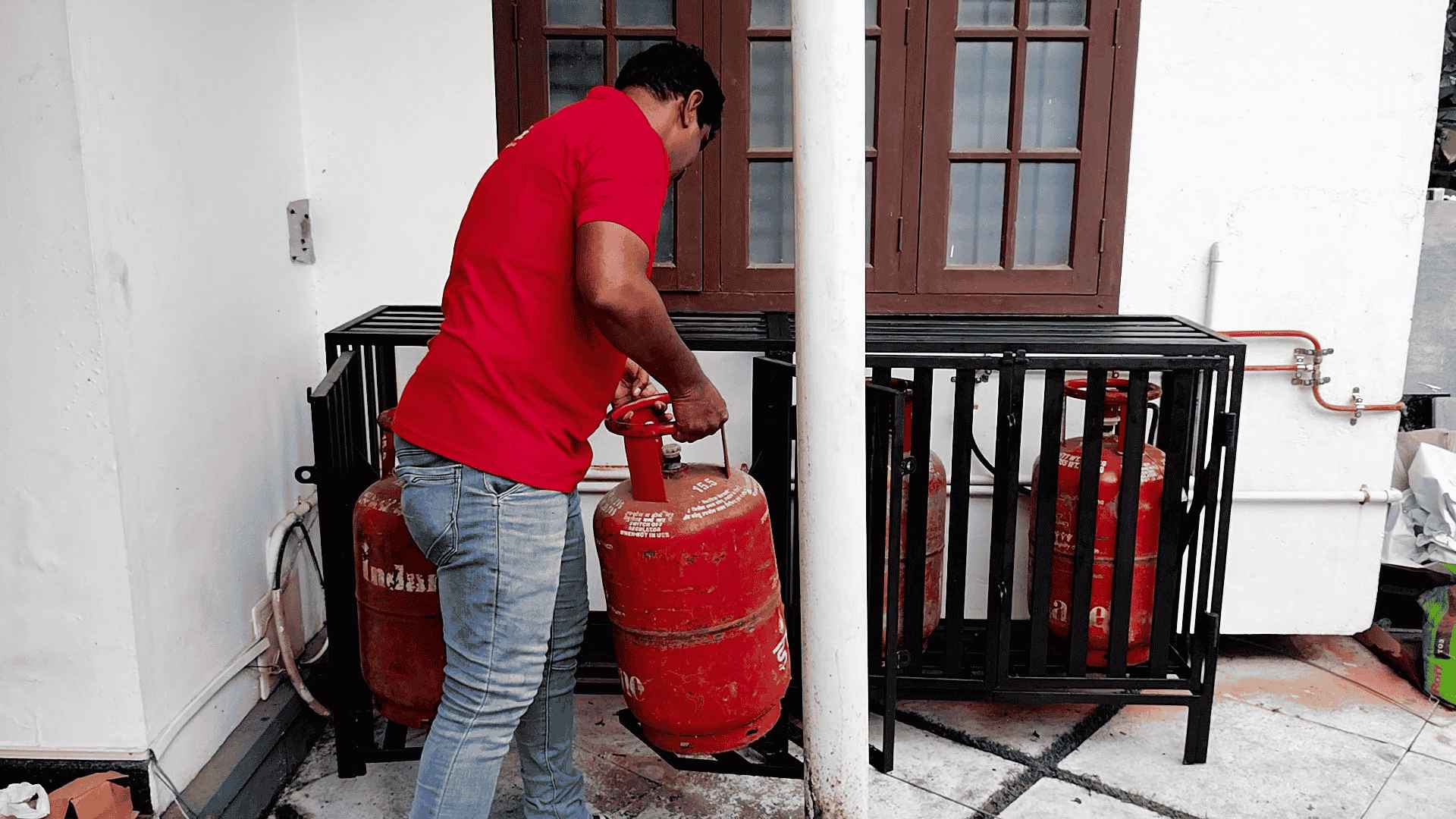
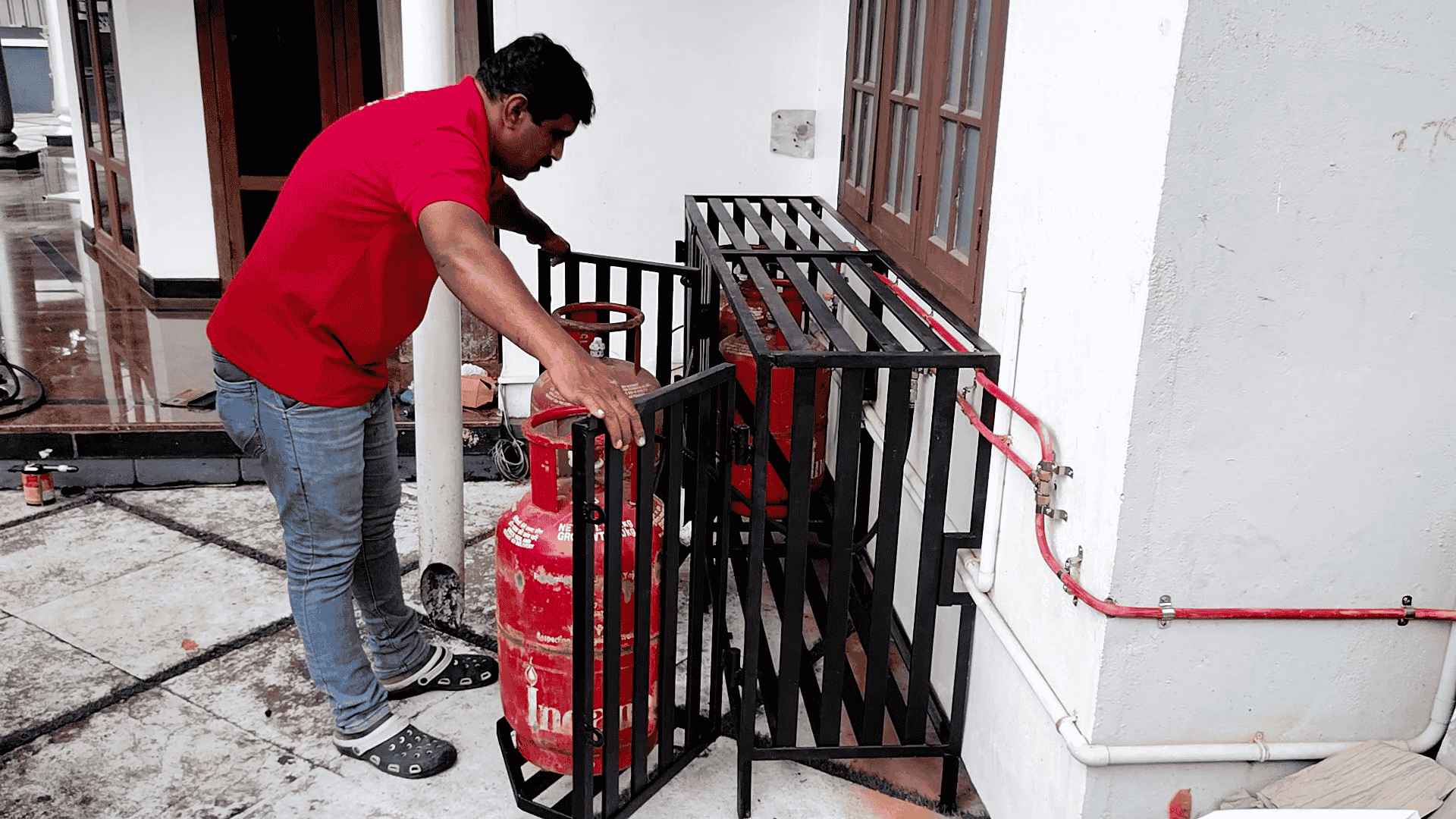
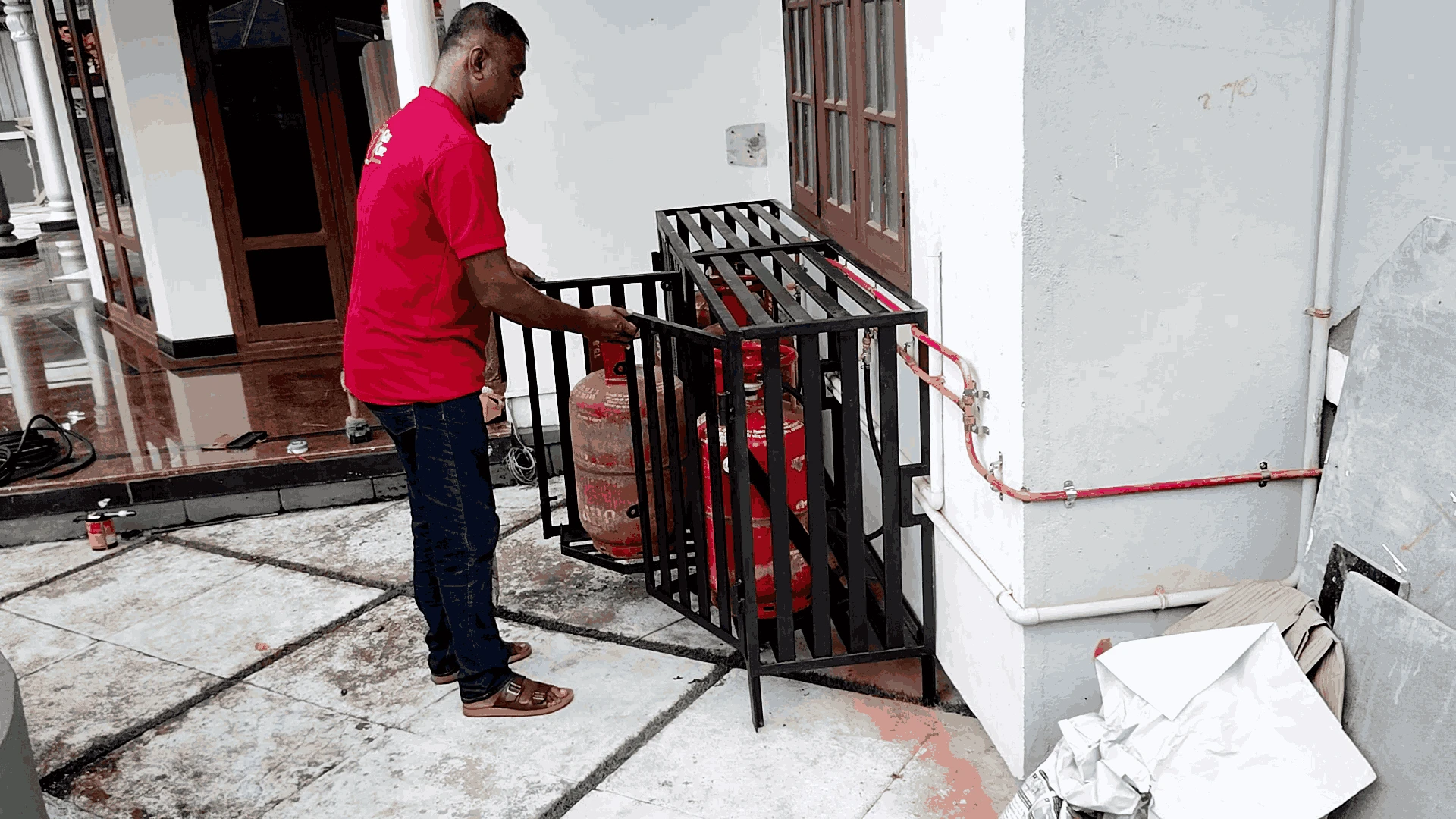
Go beyond the words and witness the quality and precision that define Gas Care. Our video gallery offers a glimpse into our manufacturing process and real-world installations.
Connect with Gas Care on social media.
Questions? Talk to an Expert
Have questions or need assistance? Our expert team is ready to help. Get in touch with us, and we will provide the support and information you need to make the best decision for your home.